Categories
3 out of 5 C64 RPG

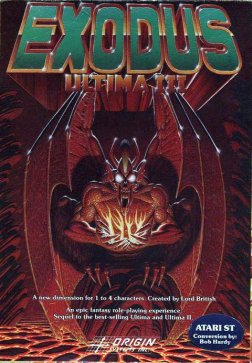
Ultima 3

Publisher: Origin Systems

Designer: Richard Garriott

Type: Roleplaying

Platform: Various

Release Date: 1983

Rating:

Once again, the Ultima series takes a slightly different turn. Well, first of all, the game has moved away from a single character to where you now have to create a party of characters so be able to solve the game. Also, combat moves into a specific combat screen where you fight against your opponents, which makes it somewhat better than the previous games where you would run around the world trying to escape all of the nasties. Also, one really interesting thing is that you can choose one of three genders, that being male, female, or other (though the choice doesn’t do much). Oh, and there happens to be this race called a Fuzzy, but I have no idea what it is supposed to be.

So, it looks like you haven’t quite finished your job yet because even though Mondain and Minax have both been killed, it seems as if they have left their computer, Exodus, running. Okay, this isn’t quite like the computer that you happen to be using to read this review, but other it is some sort of supercomputer with some hugely impressive AI component that is controlling a world full of nasty monsters. Anyway, your job is to turn it off, and if you think that it just involves pulling the plug, well, it is a little more difficult than that.

I did eventually manage to complete this game, but I can’t say that it was one of my favourites. I guess it is sort of that type of game that straddles the earlier releases, which are sort of a breakthrough, and the really outstanding games that are to come. Though, another interesting thing is seeing what they took, and what they happened to have left behind when they moved onto the next project. For instance, it seems as if creating a party yourself was eventually dropped in the next iteration.

Still, this was a fun game, even if it didn’t quite reach the accolades of some of the others. It was difficult, but not too difficult, but then again that seemed to be the case with a lot of these roleplaying games, where the early part is really hard, but once your characters reach a certain point, then things start to get a little easier. Still, it was fun when I played it, especially with the fact that the whole purpose of the game is to turn off a computer.

Anyway, you can find details about this game on Wikipedia (which shouldn’t surprise anybody), but there are also entries on this game on the Ultima fandom page, as well as on the c64 wiki page. Oh, and if you want a walkthrough, there is one on the Ultima codex.
Categories
3 out of 5 C64 RPG

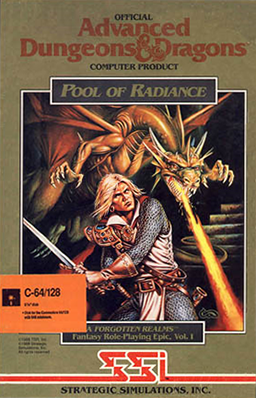
Pool of Radiance

Publisher: Strategic Simulations Inc.

Designer: Chuck Kroegel

Type: Roleplaying

Platform: Various

Release Date: 1988

Rating:

I believe that this was basically the first of the official Dungeons and Dragons games, and it certainly showed it. Mind you, I do remember when it was first released, and it was all the rage, namely because my friends and I loved Dungeons and Dragons, so when an official game was released, we all wanted a copy of it so we could not only play it but see who the first to complete it world be (spoiler – it wasn’t me).

So, the whole idea is that you create a party and then you have to go into this ruined city and clear it out of all of the monsters therein. The first level, for want of a better word, was the slums, and I remember that the final battle in the slums was really, really hard, namely because you were low-level characters and had to fight a bunch of ogres are trolls – gee, that was fun.

The interesting thing was that the next level you had to go and fight undead. Seriously, what is it with fighting undead on the second stage of the game – all of the games seemed to do that for some reason. In fact, I find undead overused, and rather boring

Pools of Radiance was a good game, and rather challenging, though of course being the first of a series certainly showed a lot. Obviously, they were still trying to tweak the game as the next ones were produced. I did manage to complete it, and it certainly did get easier one you managed to get through that really annoying battle with the trolls and the ogres (honestly, who thought that a bunch of first level characters could actually beat them). The game was also open to being mapped as well, though back in those days maps tended to be placed on pieces of papers, which meant that I had a huge graph book full of maps form the various games that I played.

Sure, this isn’t going to stand up to any of the modern games, and in hindsight, it really wasn’t all that great either, compared to the forerunners that really set the scene up. However, it was still fun, and does deserve its place in history.

Anyway, you can find out more about this game on Wikipedia, and of course it has an entry on the Forgotten Realms Fandom wiki. Oh, and you might also be looking for a walkthrough as well, and yes, there is one.

Categories
4 out of 5 C64 RPG

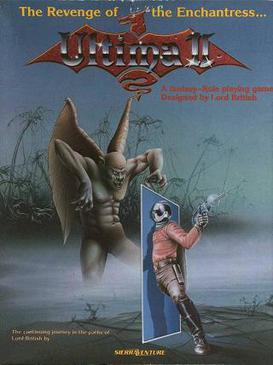
Ultima 2

Publisher: Origin Systems/Sierra On-Line

Designer: Richard Garriott

Type: Roleplaying Game

Platform: Various

Release Date: 1982

Rating: undefined

This is one of those games that requires a lot of imagination to appreciate how great it actually is. Initially, when I was playing it (and ironically I got if off a truckie that happened to live just down the road from me) I would just keep on dying, but after years of perseverance, I actually managed to kill Minax, who happens to be hiding in the realm known only as the Realm of Legends (though I suspect that in later versions it would become Britannia).

So, you start off in the modern world, and it appears that these gates have appeared and monsters are all pouring out. Yes, you play the game on Earth, and there are these gates (which also appear in later games as well) that allow you to travel to different time periods. The date of the game shows us the feeling at the time as we end up at a point where the Earth has been destroyed by Nuclear War. However, you can also travel to the distant past, the ancient world, and of course the land of legends.

If that isn’t enough, you can also go to outer space where you visit each of the planets in our solar system (actually, you have to do that to complete the game, though you will need fuel for the rocket which, not surprisingly, lies at the bottom of the dungeons). Yeah, there are dungeons as well, and you can complete the game without actually going into any of them, but as I mentioned in a side remark, you may need to to get fuel for your rocket.

Honestly, while the game, and the gameplay, really isn’t all that great (it was made in 1982), the story behind it, and the concept, is actually pretty awesome. In fact, I don’t think I have found any other games with a similar storyline, though they are probably out there.

Well, not surprisingly, Wikipedia has an entry for this game, since it is pretty popular, and quite well known. You can also find details of this game on one of the Ultima Wikis. Oh, and Moby Games also has an entry, though it isn’t anywhere near as detailed. If you are looking for a walkthrough, you can find one here.

Categories
3 out of 5 RPG

Ultima I: The First Age of Darkness

Publisher: Origin Systems

Designer: Richard Garriot

Type: Roleplaying

Platform: Various

Release Date: 1981

Rating:

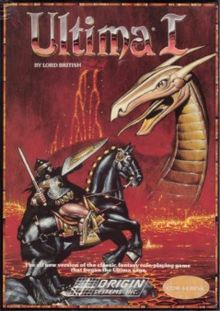
As you can probably discern from the title, this was the very first of the Ultimas, a game that ended up not only spawning eight sequels, several offshoots, and one of the first MMORPGs. So, this one takes up right back to the beginning where we can experience what it was like to actually play a computer roleplaying game back in the early eighties, and it certainly does have quite a lot of charm about it, even if it might not be on the scale of Skyrim.

Well, considering that it was originally released on an 8-bit machine, we certainly can’t expect Skyrim, but then again, for its time, it certainly did break a lot of boundaries. In fact, you had a quest, which differs from a lot of the other games at the time, which just involved you descending into dungeons and killing as many monsters as possible until you died. No, this one you had to go on a quest to kill a powerful mage.

The game involved you travelling over multiple continents, visiting multiple towns, and descending into multiple dungeons, mostly to build up your power so that you could then go and deal with that really nasty mage that you are supposed to kill. It was fun when I played it, and it certainly did steal hours of my life back when I was a teenager.

I guess, as I mentioned, it is certainly not something that you could hold up to modern games, but it is great to see what it was like back in the day. Oh, and the game was initially a top-down view, but that changed when you entered the dungeons. This was a format that the game used for most of its sequels, at least until Ultima 6 (as far as I’m aware).

Anyway, not surprisingly, this game appears on Wikipedia (something a a number of other games haven’t managed to do, which probably says a lot about that particular game). Also, I have discovered two wikias from Ultima – the Codex of Editable Wisdom, and the Ultima Codex. Of course, there are plenty of walkthroughs as well, of which this is one.

Categories
5 out of 5 Adventure RPG

The Bard’s Tale

Publisher: Electronic Arts/Interplay Productions

Designer: Micheal Cranford

Type: Roleplaying Game

Platform: Various

Release Date: 1985

Rating:

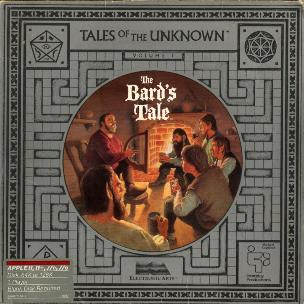
I still remember when this game first appeared – it was literally a revolution in the style of the Computer Roleplaying Game. Sure, it is pretty basic, but that is what is to be expected for a game that appeared in the 80s. Also, it isn’t as big as some of the other games, fitting on just a single C64 disk, with one side being for the city, and the boot, and the other side being for the dungeons. From what I remember there are only four (or five) dungeons to explore, so yeah, the game isn’t actually that big, though of course, these dungeons are of a decent size.

I’m not quite sure of the story, but you start in the city of Skara Brae (which is named after a small prehistoric city that is located on an island in Scotland – if it wasn’t for Bards Tale, this rather small town, consisting of only 8 houses, would have gone by the wayside), which has been taken over by some evil mage named Mangar. So, your quest is to basically kill Mangar – something that I managed to accomplish back in my teenage years.

Honestly, I wouldn’t recommend playing this game on a C64 emulator because, honestly, it is really, really, really slow, and there is no what to speed up the combat either, and the combat can get pretty long. Sure, there are somewhat faster PC versions, and the graphics are slightly better as well. However, if you really want to play this game they have recently released an enhanced version, which is available on Steam. Yeah, this is something that I am really tempted to check out sometime, though not right away.

While it certainly doesn’t come close to any of the games that I have played recently, this game still has a charm and a legacy, about it that will keep it in the annals of classic computer games.

Anyway, you can find out more about this game on Wikipedia, or you can even check out a wiki page dedicated to it, and the service. Oh, and if you want some hints then a page has been set up for that as well.

Categories
5 out of 5 RPG SNES

The Legend of Zelda

A Link to the Past

Publisher: Nintendo

Designer/Director: Takashi Tezuka

Type: Roleplaying Game

Platform: Super Nintendo

Release: 1991

Rating:

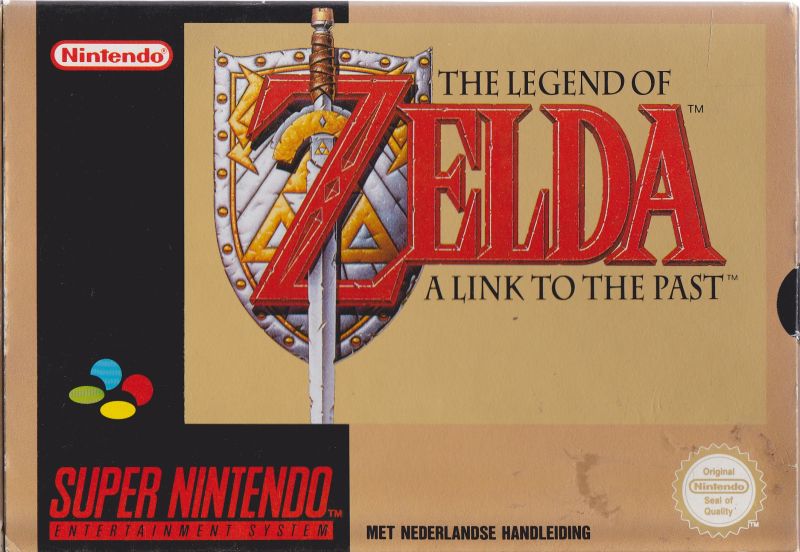
I played this game years ago, right through to the end. It surprised me somewhat because I never expected to find a full-blown roleplaying game on a console machine, namely because from my experience (at least back when I was playing it) there was no way to save the game, especially after you turned the machine off. Well, it turned out that you can, and it also turns out that this game is pretty massive.

As I mentioned, it has been ages since I played this game, and played it right through to the end, but I can say that I thought it was amazing. The game uses a top-down perspective, and it is also pretty cool the number of things you can do in the game with that simple SNES controller. In fact, one of the fun things to do was to pick up the bushes and throw them (though that generally just annoyed people).

You start off in a hut, and your hut mate (brother, uncle, I don’t know) runs off in a hurry and tells you not to leave. Well, being the obedient person that you happen to be, you just hang around the hut and leave it at that. No, not quite, you ignore the command and run out to see what is going on, especially since you have this person screaming for help, through some psychic connection or something like this (yes, it is a fantasy Roleplaying Game as well).

I thoroughly enjoyed this game when I played it, though I should point out that it is pretty huge, and it will no doubt keep you occupied for hours. However, as a game, it is pretty awesome.

Not surprising, for such a popular and well known game, there is a Wikipedia article on it. Actually, there is a wiki page completely dedicated to the Zelda legacy (whom I discovered is the name of the princess). Oh, and if you happen to get stuck, like with a lot of these types of games, there are plenty of walkthroughs.

Categories
3 out of 5 C64 RPG

Sword of Fargoal

Publisher: Epyx

Designer: Jeff McCord

Type: RPG – Rogue Like

Platform: C64

Rating: undefined

This is what is termed as a ‘rogue-like’ game, namely it is a rather simply constructed roleplaying game that involves you exploring a dungeon, killing monsters, and collecting treasure. This is one of those games that I played quite often back in the day, namely because it was quite simple, which compared to a lot of other rogue-like games, is certainly saying something. You basically start off on the first level of the dungeon, and make your way down as far as you can go before you happen to be killed off by one of the many monsters (or traps) that happen to populate the labyrinth.

It was fun, and as I mentioned, rather simple. The fact that you could play the game with a joystick (or controller) made it quite playable, and if you were lucky, you could certainly go quite far. Mind you, you only had a limited amount of space for gold, but you could also deposit gold into one of the temples, which happened to be on each of the levels, and it would be converted into experience. There were also magical items, such as potions and spells, that you could use, though there weren’t too many which meant that the keyboard interaction was limited.

The thing I don’t like about the game is that when you advance a level your hit points basically stay the same, and healing does take quite a while, unless of course you manage to find either a regeneration spell, or a healing potion. The other thing is that the game ends up being pretty repetitive, which meant that after a while I would end up losing interest in it.

One thing that I do remember though is that the game was written in BASIC, and my brother managed to not only discover that, but also hack into it so that the number of special squares that appeared per level increased by something like four. Mind you, these days, if I were to be able to break into the code, it might be possible to rewrite the code to make it even more beneficial, though once again, that sort of defeats the whole purpose.

If you are interesting in finding out more about this game, there is always Wikipedia, though you can also go to the C64-Wiki, or even Lemon 64. If worse comes to worse, well, you could simply type ‘Sword of Fargoal’ into your favourite search engine.

Design a site like this with WordPress.com
Get started